

Blog
Home Phlegm Suctioning Sessions for Seniors & Bedridden Patients in Saudi Arabia
Maintaining clear airways is vital for elderly relatives and bedridden family members who struggle to clear respiratory secretions independently. As individuals age or experience reduced mobility due to neuromuscular conditions, stroke, or chronic illness, the natural cough reflex weakens. This inability to clear mucus effectively can lead to severe complications, including aspiration pneumonia, respiratory distress, and systemic infection. Professional home phlegm suctioning sessions offer a safe, clinical, and comfortable solution for families seeking high-quality respiratory care within the comfort of their own homes in Saudi Arabia.
When Do Seniors & Bedridden Patients Need Phlegm Suctioning?
Airway clearance is not merely a matter of comfort; it is a vital clinical intervention. Families should monitor elderly or bedridden relatives for specific signs that indicate accumulated phlegm is obstructing normal breathing.
Key indicators that a patient requires airway suctioning include:
- Audible Gurgling or Rattling: A wet, noisy breathing sound originating from the throat or upper chest that does not clear after coughing.
- Visible Breathing Distress: Rapid, shallow breathing, flared nostrils, or the use of accessory neck and chest muscles to pull air into the lungs.
- Persistent Coughing Without Relief: Repeated, tiring cough attempts that fail to mobilize deep-seated secretions.
- Drop in Blood Oxygen Saturation (SpO2): Pulse oximeter readings consistently dropping below normal baseline levels (typically under 95%).
- Restlessness or Cyanosis: Unexplained anxiety, confusion, or a bluish tint around the lips, fingernails, or skin, signaling insufficient oxygenation.
Why Licensed Specialists Must Perform Suctioning to Prevent Airway Irritation
While suctioning equipment is available for domestic use, performing the procedure without proper clinical training carries substantial risk. The mucosal lining of the trachea and pharynx is exceptionally delicate. Improper catheter insertion depth, excessive negative pressure, or aggressive techniques can cause severe mucosal trauma, tissue bleeding, airway spasms, and painful inflammation.
A licensed medical specialist, such as a respiratory therapist or certified clinical nurse, ensures that every session adheres to strict physiological parameters. Professionals select the correct catheter size, calculate precise vacuum pressures tailored to the patient’s age and condition, and limit suction duration to prevent sudden hypoxia. Furthermore, expert clinicians maintain strict sterile protocols, dramatically reducing the risk of introducing hospital-acquired pathogens into fragile airways.
Chest Physiotherapy & Secretion Mobilization
Suctioning is most effective when combined with comprehensive secretion mobilization strategies. Medical professionals utilize specialized chest physiotherapy techniques to loosen stubborn mucus lodged deep within lung segments, allowing it to move upward into the main airways where it can be safely suctioned.
Key techniques include:
- Postural Drainage: Positioning the patient at specific angles to utilize gravity in draining secretions from lower lung segments toward the central airway.
- Chest Percussion and Vibration: Rhythmically clapping the chest wall over affected lung regions using cupped hands or mechanical vibrators to break up thick secretions.
- Deep Breathing & Huff Cough Exercises: Guiding conscious patients through directed breathing techniques to maximize lung expansion and encourage natural secretion movement.
Integrating these modalities optimizes respiratory outcomes. Patients suffering from chronic conditions also benefit from complementary care plans, such as structured home respiratory therapy for asthma and long-term oversight through dedicated home nursing care in Saudi Arabia.
Sterilization Protocols & Medical Suction Equipment Used at Home
Safety during home respiratory sessions depends on strict adherence to infection control standards. Clinical teams bring hospital-grade, portable technology directly to the patient's bedside while enforcing aseptic techniques.
- Sterilization Steps: Clinical Standard & Protocol: Single-use sterile catheters, sterile glove technique, antiseptic hand hygiene, and antiseptic catheter flushing post-procedure. — Safety Purpose: Prevents bacterial cross-contamination and lowers the risk of ventilator-associated or aspiration pneumonia.
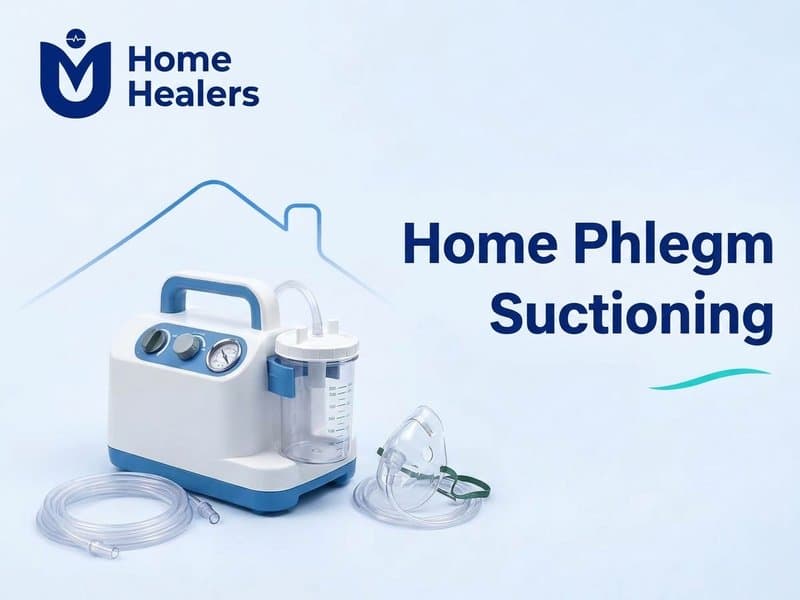
- Equipment Used: Clinical Standard & Protocol: Portable, medical-grade suction machines with adjustable vacuum regulators, soft-tip suction catheters, and closed suction systems for tracheostomies. — Safety Purpose: Guarantees precise pressure control and minimizes mechanical trauma to delicate airway tissues.
- Vital & Oxygen Monitoring: Clinical Standard & Protocol: Continuous pulse oximetry, pre- and post-suction heart rate assessment, and lung auscultation using a stethoscope. — Safety Purpose: Ensures immediate detection of desaturation or cardiac stress during and after the procedure.
Training Families on Safe Sitting & Sleeping Positions to Reduce Mucus Buildup
A critical aspect of professional home care involves empowering family members and primary caregivers with practical daily management skills. Proper positioning plays an indispensable role in preventing mucus accumulation and aspiration.
Clinicians instruct caregivers on several vital positioning techniques:
- Semi-Fowler’s and Fowler’s Positions: Elevating the head of the bed between 30 and 45 degrees (or up to 75 degrees during meals) prevents stomach contents from refluxing and aids natural lung expansion.
- Side-Lying (Lateral) Recovery Position: For uncommunicative or immobile patients, positioning them on their side with head support encourages secretions to drain naturally out of the mouth rather than pooling in the throat.
- Frequent Position Changes: Alternating the patient's posture every two hours prevents fluid accumulation in dependent lung areas and reduces the risk of pressure ulcers.
Low Oxygen Warning Signs Requiring Urgent Medical Intervention
While routine home phlegm suctioning sessions keep airways clear, caregivers must recognize acute warning signs that indicate a medical emergency requiring immediate hospital intervention.
Seek urgent emergency care if the patient exhibits:
- Severe Cyanosis: A sudden turning blue or grey of the lips, tongue, or face.
- Unresponsiveness or Extreme Lethargy: Inability to wake the patient or sudden profound confusion.
- SpO2 Levels Dropping Below 90%: Oxygen saturation levels that fail to recover despite suctioning and supplemental oxygen administration.
- Stridor or Gasping: A high-pitched, squeaking sound during inhalation, indicating an upper airway obstruction.
- Chest Wall Inward Retractions: Deep sinking of the ribs and chest during inspiration, signaling severe respiratory fatigue.
How to Book Home Respiratory & Suctioning Sessions with Home Healers
When your loved one requires professional, gentle, and reliable airway clearance, Home Healers delivers expert clinical care directly to your doorstep. Operating under Ministry of Health (MOH) License No. 1400090225, our team of licensed respiratory therapists and clinical nurses provides sterile suctioning at home, chest physiotherapy, and comprehensive vital sign monitoring.
We deliver compassionate home care services across major cities in Saudi Arabia, including Riyadh, Jeddah, Makkah, Madinah, Dammam, and Al Khobar.
To schedule a session or inquire about senior chest physiotherapy cost, contact our team:
- Unified Phone: 920035730
- Official Website: home-healers.com/en
FAQs About Home Phlegm Suctioning Sessions
1. Are home phlegm suctioning sessions painful for elderly patients?
When performed by a trained specialist using soft catheters and correct vacuum pressures, suctioning causes minimal discomfort. Patients may experience a brief coughing sensation, but the relief of breathing freely immediately afterward greatly outweighs any temporary annoyance.
2. How often should a bedridden patient undergo suctioning?
Suctioning frequency depends on individual clinical needs. It should only be performed "as needed" based on clinical indications—such as audible gurgling, drop in oxygen levels, or distress—rather than on a rigid, automatic schedule, to prevent mucosal irritation.
3. Can family caregivers perform sterile suctioning at home?
Basic superficial oral suctioning can be taught to family members for emergency management. However, deep tracheal suctioning or managing tracheostomy tubes should be handled by licensed healthcare professionals to avoid infection, airway trauma, or hypoxia.
4. What is the difference between chest physiotherapy and suctioning?
Chest physiotherapy involves physical techniques (percussion, vibration, positioning) to loosen and move deep mucus from the small airways into the main breath passage. Suctioning is the physical removal of those mobilized secretions from the upper airway using a vacuum catheter.
5. What equipment does Home Healers bring to a session?
Our clinical team arrives fully equipped with portable, medical-grade suction units, sterile single-use suction catheters, pulse oximeters, stethoscopes, personal protective equipment (PPE), and appropriate flushing solutions to ensure a completely safe and hygienic session.
Related Services & Home Care Guides
Conclusion
Providing safe, hygienic, and effective airway care for elderly and bedridden family members is essential for their health, comfort, and quality of life. Professional home phlegm suctioning sessions eliminate the stress and physical risk of transporting vulnerable patients to medical facilities while ensuring clinical excellence at the bedside.
Do not let respiratory distress compromise your loved one’s health. Contact Home Healers today via our unified number 920035730 to book a home respiratory nurse for bedridden patients across Saudi Arabia.
Need home care? Book your service now
Leave your details, and the Home Healers team will contact you to arrange the right service as soon as possible.