

Blog
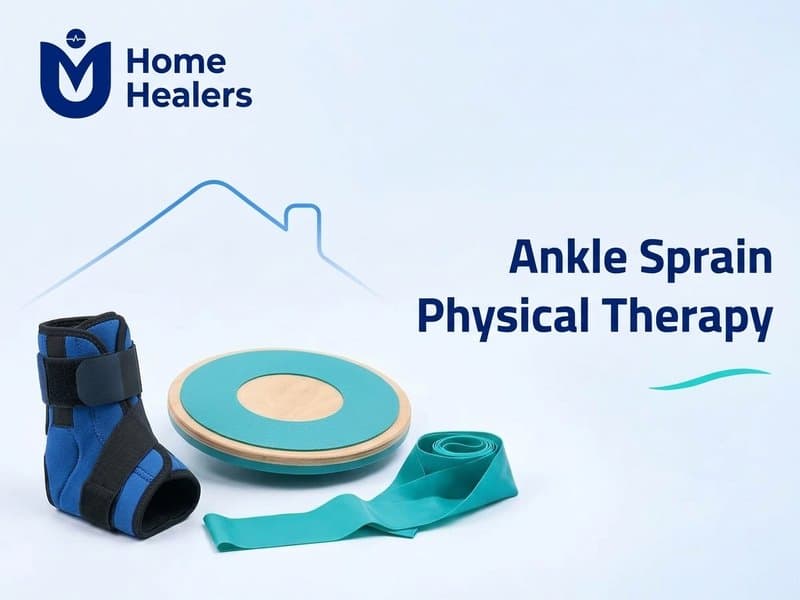
Ankle Sprain Physical Therapy at Home in Saudi Arabia: Restoring Stability & Preventing Re-Injury
An ankle sprain is one of the most common musculoskeletal injuries, occurring when the strong ligaments supporting the ankle stretch beyond their limits or tear completely. Whether caused by a sudden misstep on an uneven street, a twist during a football match, or slipping on a smooth surface, an ankle injury requires immediate, targeted attention.
Unfortunately, many individuals in Saudi Arabia treat a sprain as a minor inconvenience, relying solely on rest and ice. Neglecting targeted rehabilitation often leads to chronic ankle instability home therapy needs, persistent joint stiffness, recurring give-way sensations, and long-term cartilage wear. Opting for professional ankle sprain physical therapy at home ensures your ligaments heal with structural integrity, restoring full mobility while allowing you to recover within the comfort of your living space.
Grades of Ankle Sprains & When X-Rays Are Needed Before Therapy
Understanding the severity of your sprain is essential before beginning any movement regimen. Ligament injuries fall into three primary categories based on structural damage:
- Grade 1 (Mild): Ligament Condition: Microscopic tearing without joint instability. — Key Symptoms: Mild tenderness, slight localized pain upon movement. — Swelling & Bruising: Minimal swelling; little to no visible bruising. — Weight-Bearing Capacity: Able to bear full weight with minimal discomfort.
- Grade 2 (Moderate): Ligament Condition: Partial tear of the ligament fibers. — Key Symptoms: Moderate to severe pain, noticeable joint looseness. — Swelling & Bruising: Moderate swelling; localized bruising around the joint. — Weight-Bearing Capacity: Difficult and painful to bear weight; requires limping.
- Grade 3 (Severe): Ligament Condition: Complete ligament rupture. — Key Symptoms: Severe pain, profound instability, total loss of function. — Swelling & Bruising: Significant, rapid swelling; extensive discoloration. — Weight-Bearing Capacity: Impossible to bear weight without extreme pain.
Knowing When to Get an X-Ray
Before starting ankle sprain physical therapy at home, a licensed professional will evaluate whether diagnostic imaging is required. Under established medical protocols (such as the Ottawa Ankle Rules), an X-ray is necessary if:
- You experience bone tenderness along the posterior edge or tip of either malleolus (ankle bones).
- Pain is present at the base of the fifth metatarsal or the navicular bone.
- You are completely unable to bear weight for four consecutive steps immediately after the injury and during assessment.
If a fracture is ruled out, structured physical therapy can safely begin.
Role of Home Physiotherapy in Reducing Swelling & Restoring Joint Stability
In the immediate wake of an ankle injury, inflammation and fluid collection restrict range of motion and alter normal movement patterns. Professional home physiotherapy shifts your recovery from passive resting to active, controlled healing.
Receiving care at home eliminates the stress of driving, navigating stairs, or putting premature weight on your injured joint to reach a clinic. A specialized foot injury physiotherapist Riyadh Jeddah practitioner brings clinical equipment and expert guidance directly to your door. Early home interventions focus on manual lymphatic drainage, targeted compression strategies, and dynamic elevation protocols that accelerate fluid reabsorption. By controlling edema early, your physical therapist preserves surrounding muscle tissue and prevents secondary joint stiffness.
Rehab Phases: Range of Motion, Ligament Strengthening & Balance Training
A comprehensive physical therapy program progresses through distinct functional phases designed to rebuild tissue capacity and neuromuscular control.
- Phase 1: Acute Protection & Range of Motion (ROM).
- Phase 2: Progressive Strength & Load Tolerance.
- Phase 3: Proprioception, Balance & Agility.
Phase 1: Range of Motion & Early Protection
The initial focus centers on gentle mobilization to prevent scar tissue adhesion. Exercises include ankle pumps, passive inversion/eversion within pain-free boundaries, and writing the alphabet with the toes. This gentle activation improves localized blood circulation, supplying essential nutrients to healing fibers.
Phase 2: Structural & Ligament Strengthening
Once acute pain subsides, rehabilitation shifts toward progressive resistance. Utilizing elastic bands and bodyweight movements, your therapist targets the peroneus longus and brevis muscles, which actively stabilize the outer ankle. If your injury involves neighboring structures, specialized protocols like physical therapy for metatarsal after cast may be integrated to ensure unified foot and midfoot mechanics.
Phase 3: Proprioception & Dynamic Balance Training
Ligaments contain sensorimotor receptors that inform your brain of joint positioning. When a sprain occurs, these nerve pathways are disrupted. Proprioceptive training—using single-leg stance progressions, balance boards, and dual-task activities—re-educates the body to react quickly to unexpected surfaces. For athletes returning to high-impact movements, incorporating tailored sports injury physiotherapy at home builds functional dynamic stability under heavy loads.
How Proper Rehab Prevents Future Sprains During Walking & Sports
The highest predictor of a future ankle sprain is a history of a previous sprain. Without thorough rehabilitation, stretched ligaments remain lax, and delayed muscle reflexes fail to catch the joint when it begins to roll over.
Comprehensive home rehabilitation corrects biomechanical compensation patterns. By strengthening the entire kinetic chain—including the calf complex, knee stabilizers, and hip abductors—therapists ensure your weight distributes evenly during heel-strike and push-off phases. This dynamic stabilization protects your ankle during sudden direction changes, sprinting, or walking on uneven surfaces, eliminating the cycle of chronic pain and joint instability.
Choosing Supportive Footwear & Ankle Braces During Recovery
External support plays a vital role in protecting your healing ligaments during daily activities. During your home sessions, your physical therapist will evaluate your current footwear and recommend appropriate bracing solutions based on your recovery stage:
- Rigid or Semi-Rigid Braces: Recommended during the acute stage of Grade 2 and Grade 3 sprains to prevent lateral rolling while allowing forward foot movement.
- Lace-Up Ankle Supports: Ideal for the transitional phase as you regain weight-bearing capacity and return to light activity.
- Kinesiology Taping: Applied by your therapist to provide light sensory feedback and assist in lymphatic fluid drainage without restricting movement.
- Supportive Footwear: Avoid flat, unsupportive sandals or overly flexible shoes during early recovery. Opt for structured athletic shoes with a firm heel counter and adequate arch support to stabilize the hindfoot.
How to Book Ankle Rehab at Home with Home Healers
Home Healers delivers certified, high-quality medical rehabilitation straight to your residence across the Kingdom of Saudi Arabia. Operating under Ministry of Health License No. 1400090225, our team of licensed physical therapists provides standardized clinical care tailored to your home environment.
Whether you need to review ankle sprain rehab cost Saudi Arabia options or schedule an immediate evaluation, our services are available across major metropolitan areas, including Riyadh, Jeddah, Makkah, Madinah, Dammam, and Al Khobar.
To book ankle physiotherapy at home, contact our dedicated coordination team via our Unified Phone at 920035730 or book directly through our online platform.
Frequently Asked Questions
How soon after an ankle sprain should I start physical therapy?
Gentle physical therapy can often begin within 24 to 48 hours post-injury, focusing on swelling management and gentle pain-free range of motion, provided there are no underlying fractures.
Can severe ankle sprains heal completely with home therapy?
Yes. Grade 1, Grade 2, and the majority of Grade 3 sprains heal successfully through conservative management and structured, progressive home rehabilitation without surgical intervention.
How many home physiotherapy sessions will I need?
A typical treatment plan ranges from 4 to 6 sessions for mild sprains, and up to 12 or more structured sessions for severe sprains or cases involving chronic instability.
What is the advantage of home therapy over visiting a medical clinic?
Home therapy eliminates transportation stress, prevents weight-bearing aggravation caused by transit, and allows your therapist to adapt exercises to your actual living environment and daily routine.
Will insurance cover home physical therapy for ankle sprains in Saudi Arabia?
Coverage depends on your specific insurance provider and policy terms. Home Healers provides detailed documentation and official receipts to facilitate reimbursement claims with major providers.
Related Services & Home Care Guides
Conclusion
An ankle sprain should never be left to heal by chance. Rest alone cannot restore lost balance, muscle strength, or dynamic joint protection. Investing in professional ankle sprain physical therapy at home ensures a complete recovery, protecting your long-term mobility and getting you back to daily life without fear of re-injury. Take the first step toward lasting joint health by contacting Home Healers today to schedule your comprehensive at-home assessment.
Need home care? Book your service now
Leave your details, and the Home Healers team will contact you to arrange the right service as soon as possible.